Advertising Campaign
Crossword
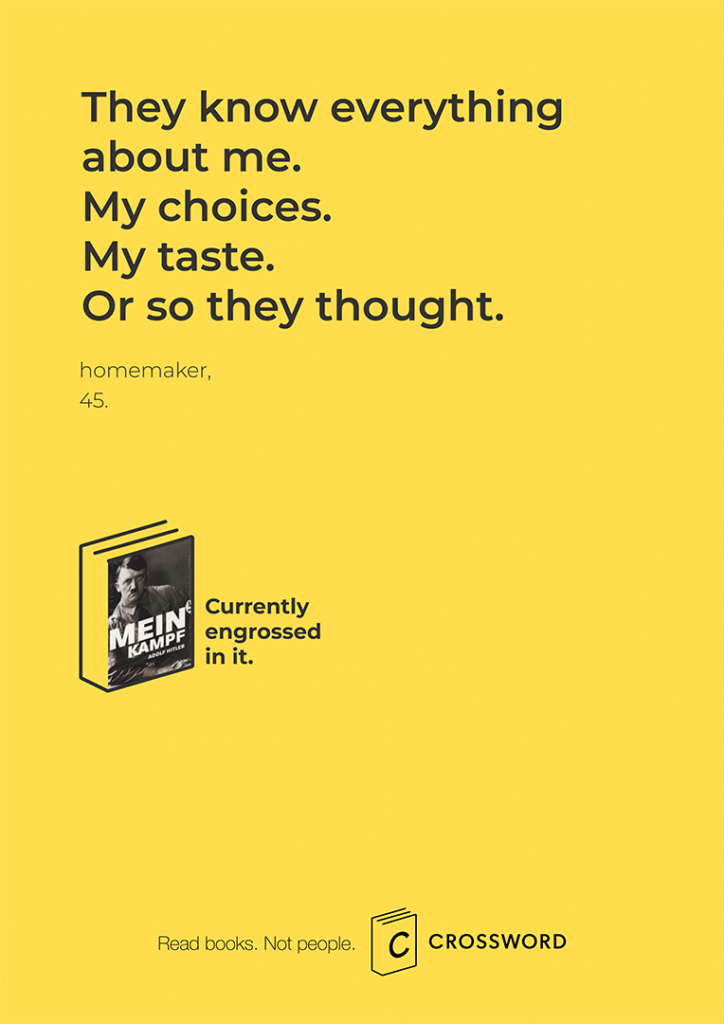
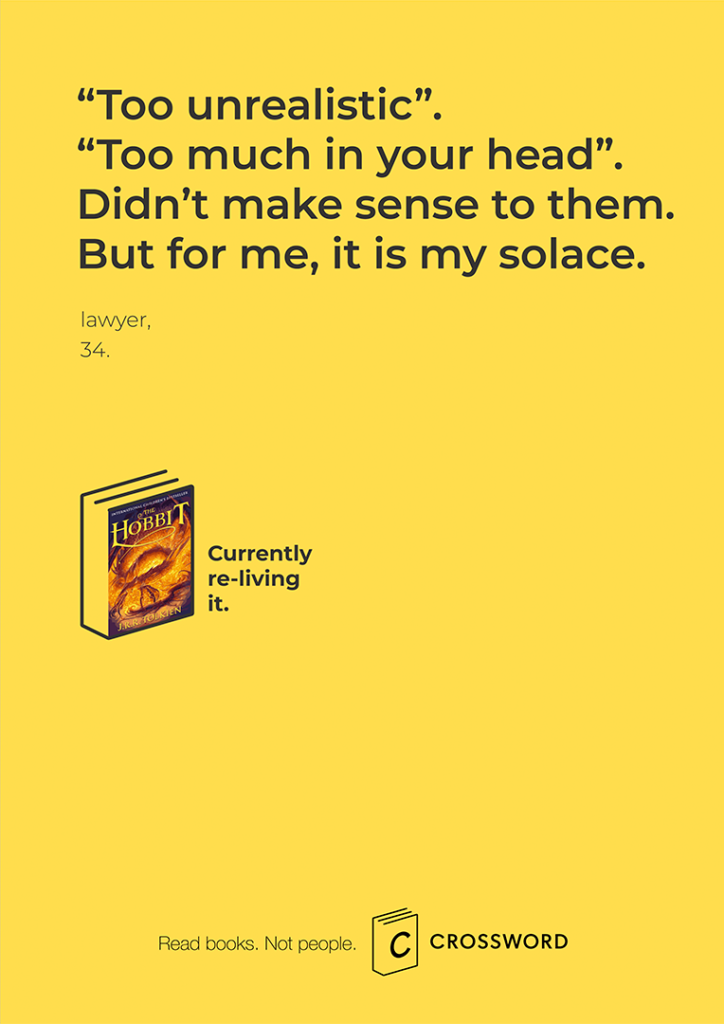
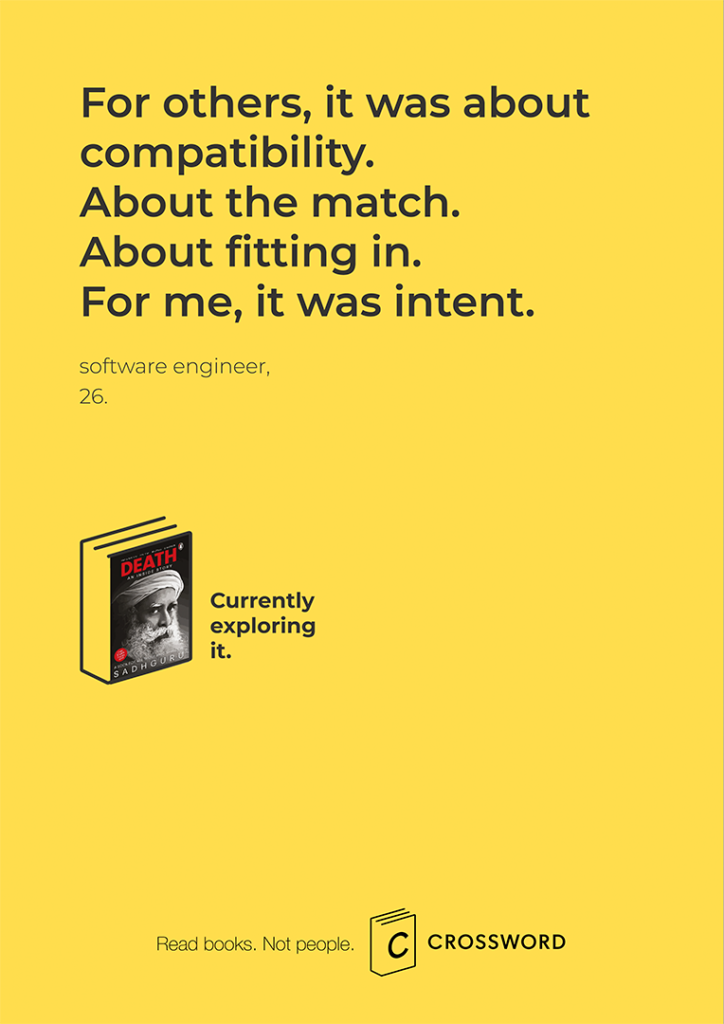
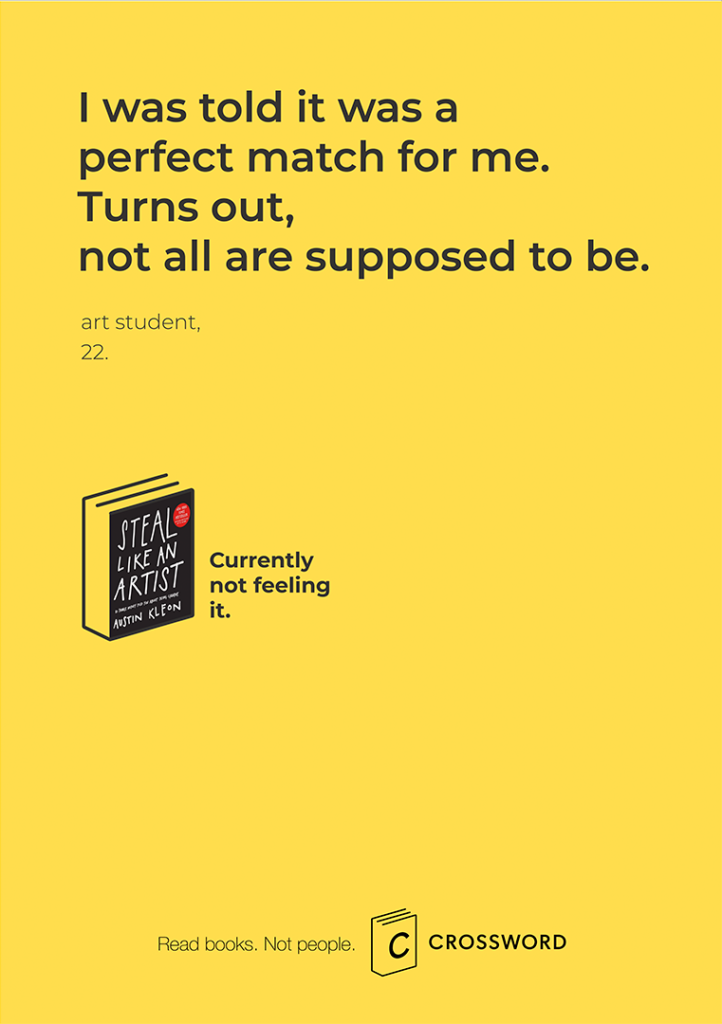
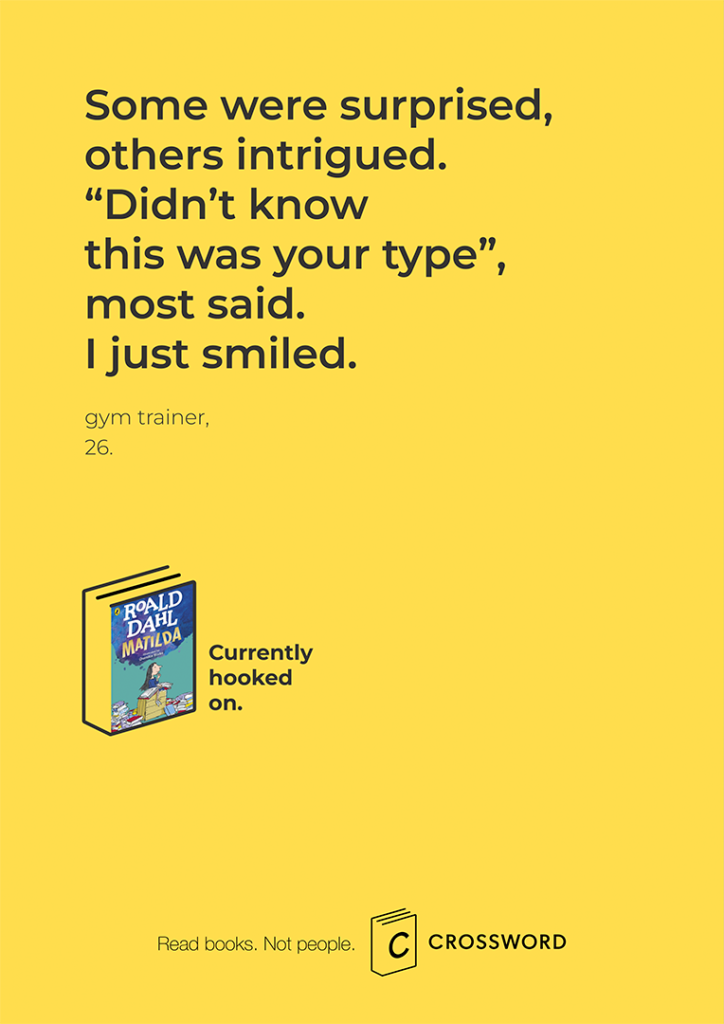
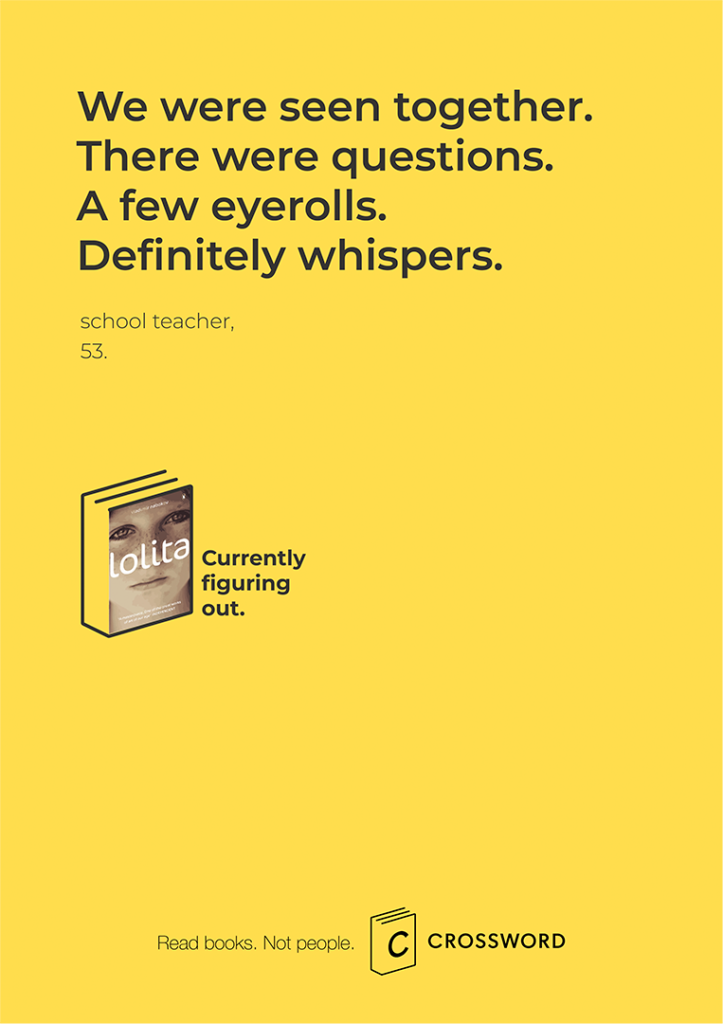
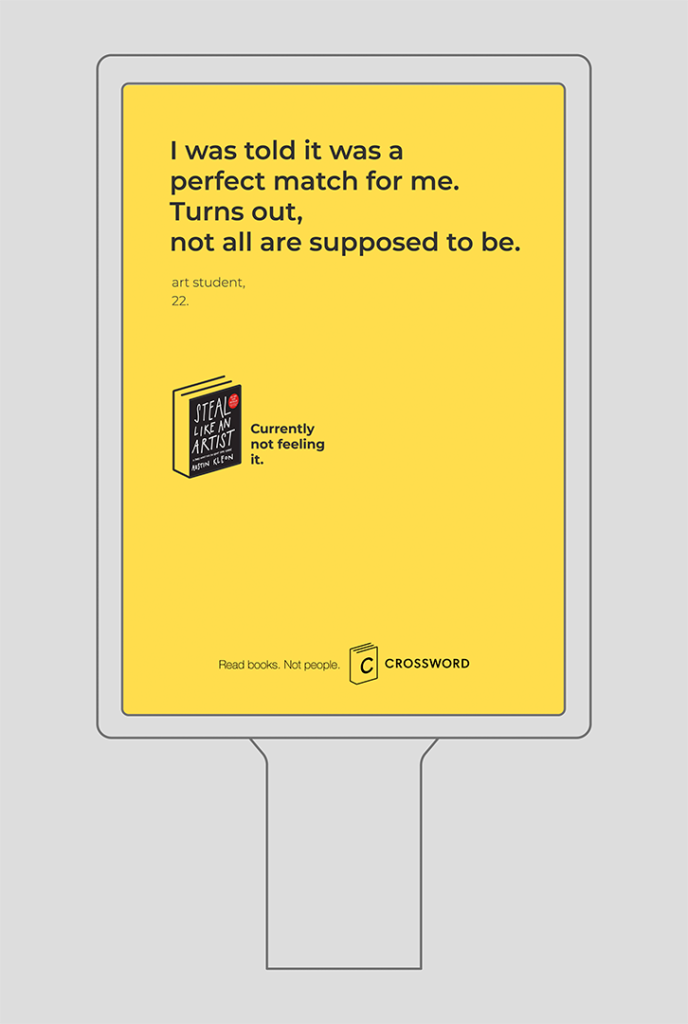
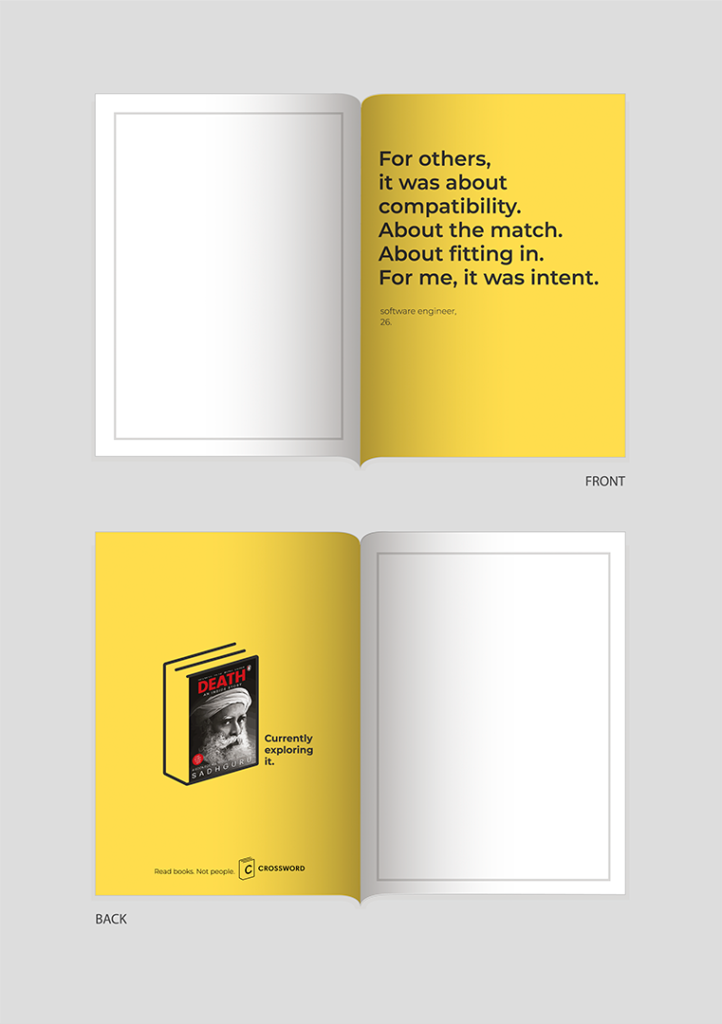
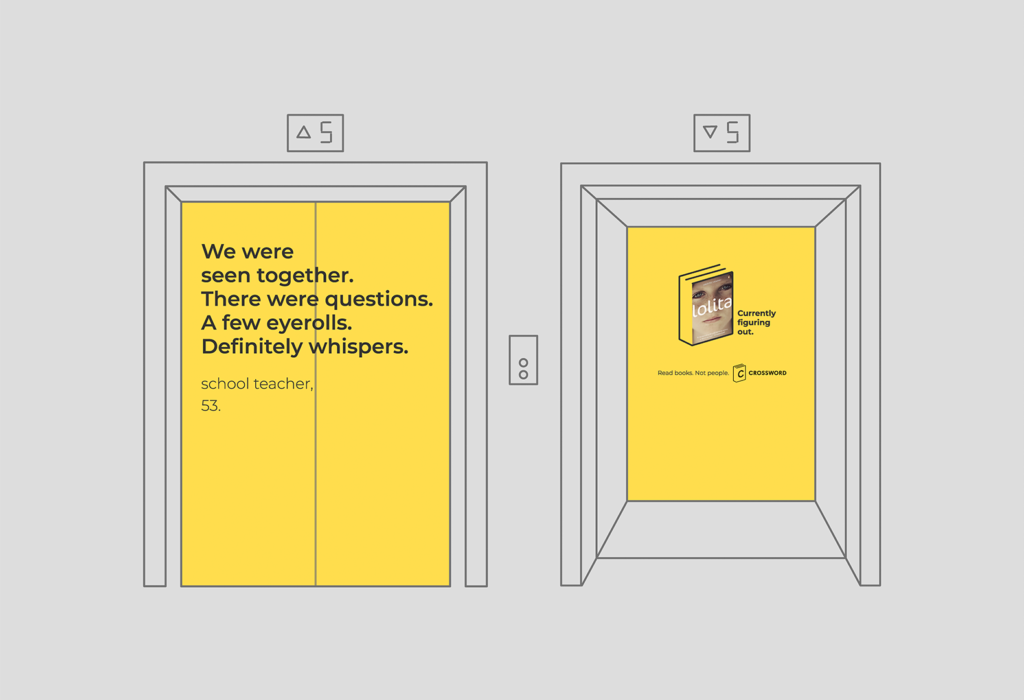
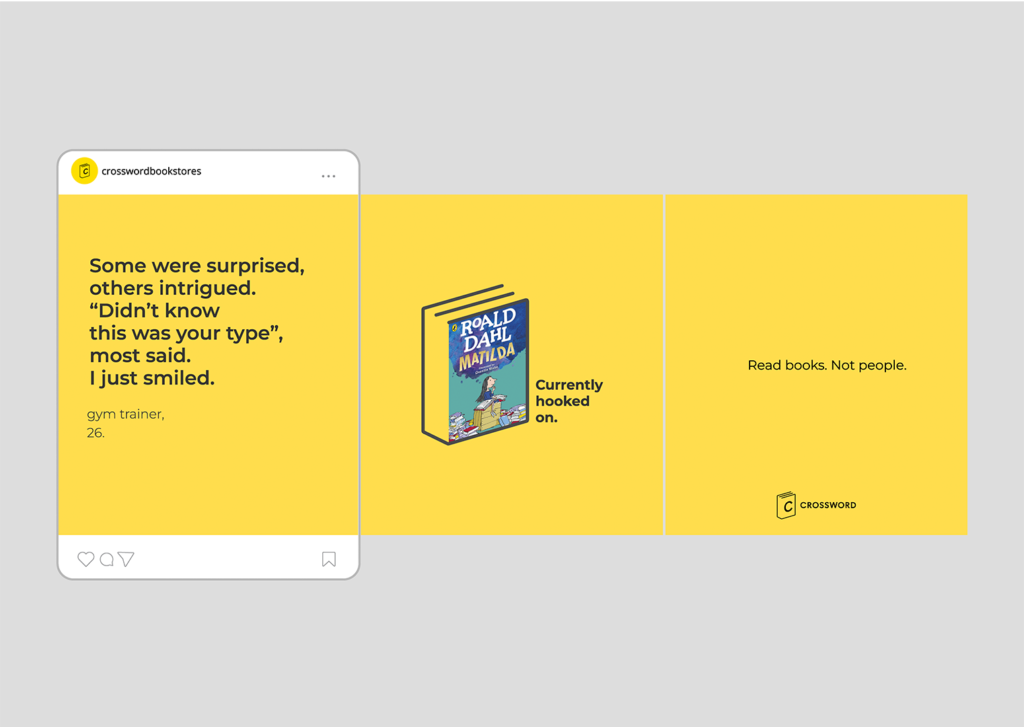
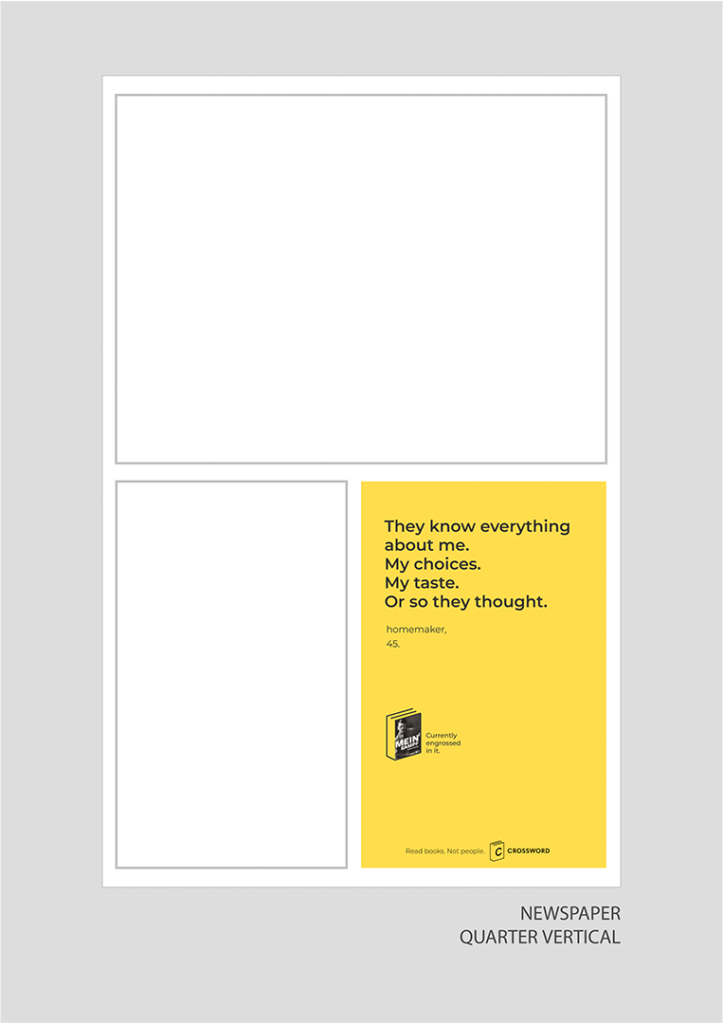
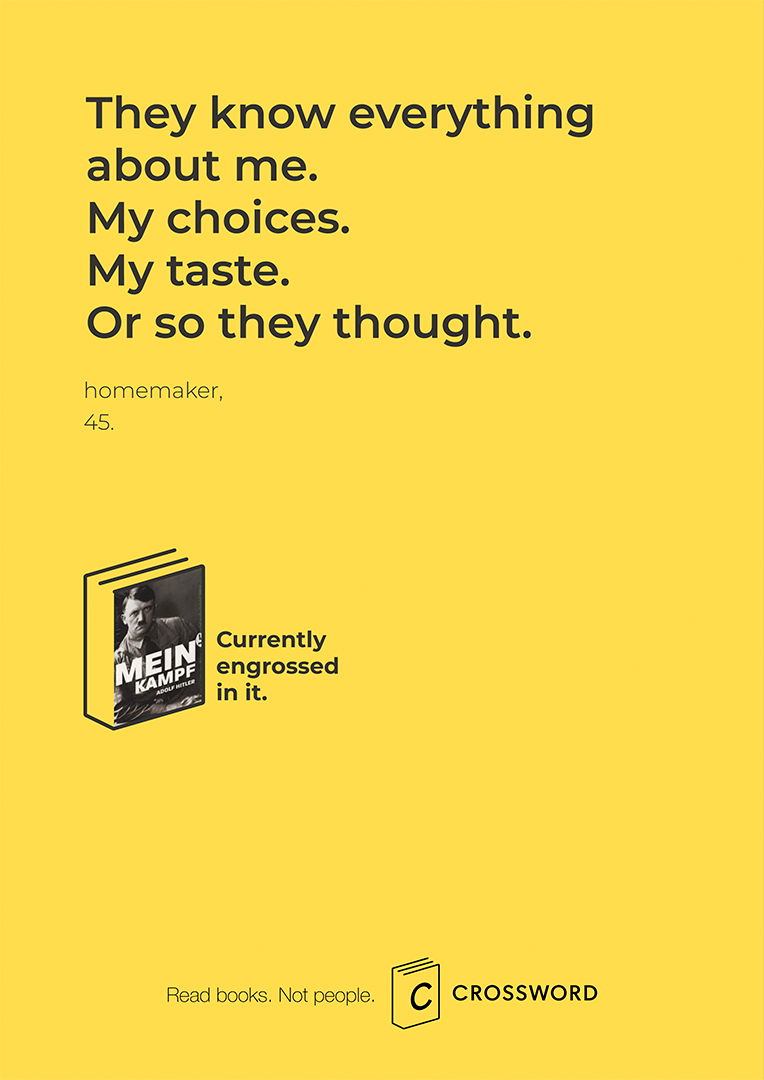
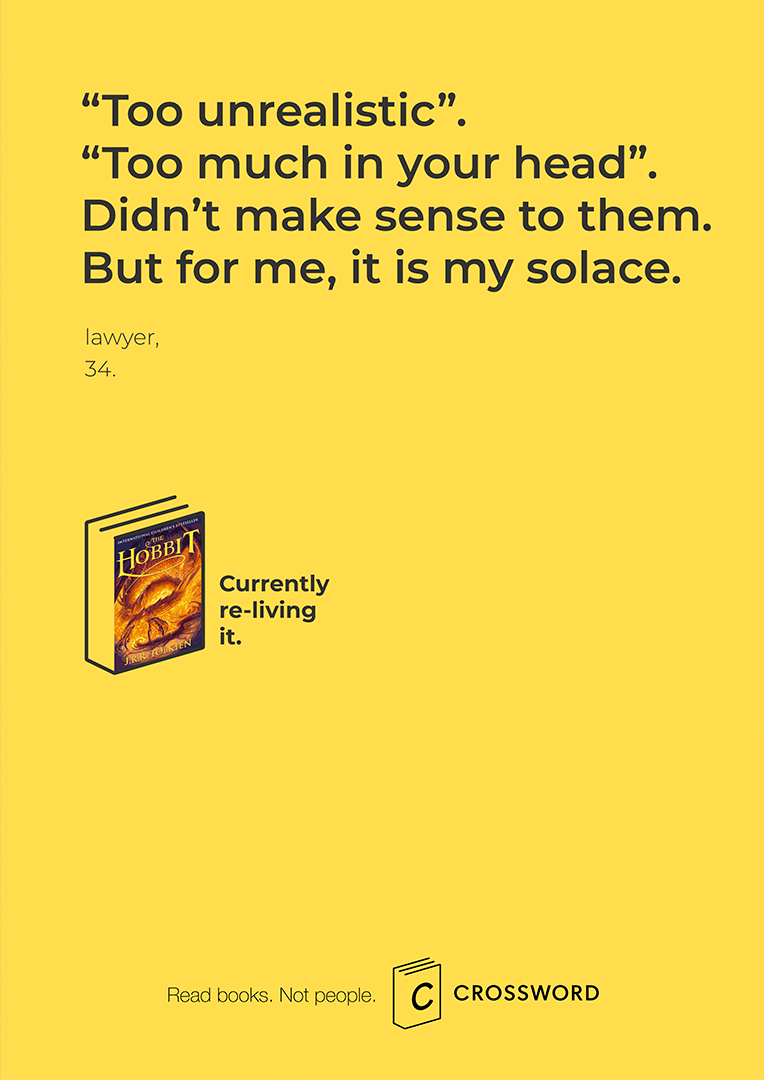
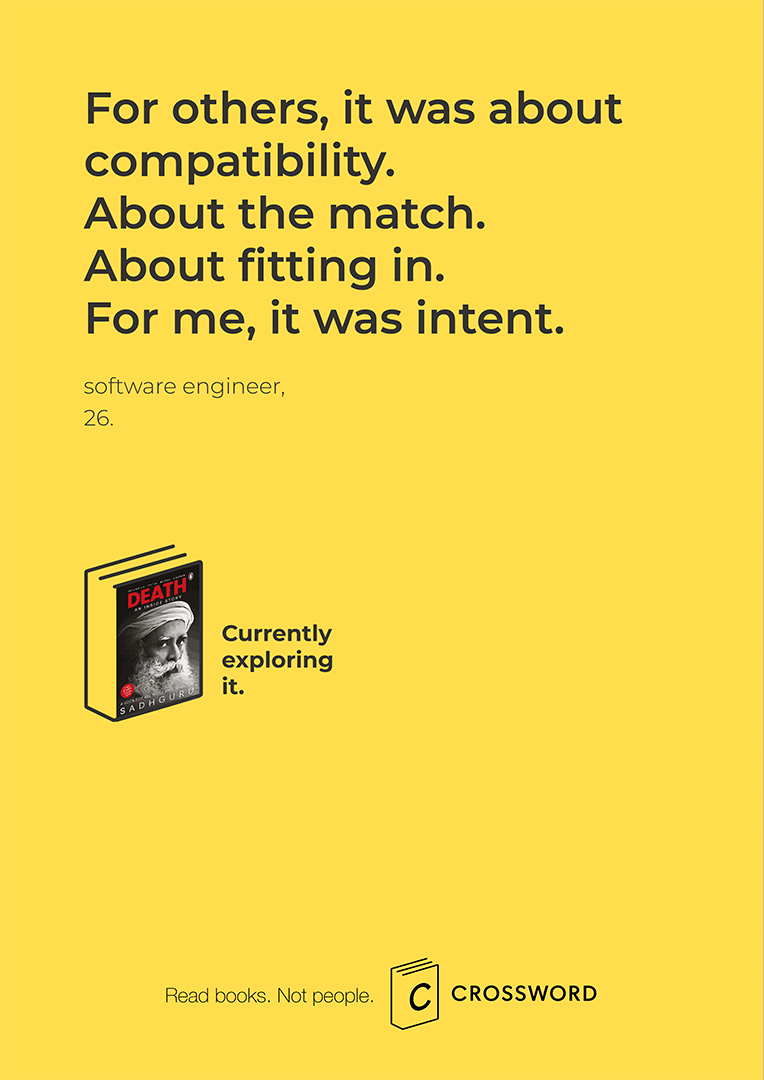
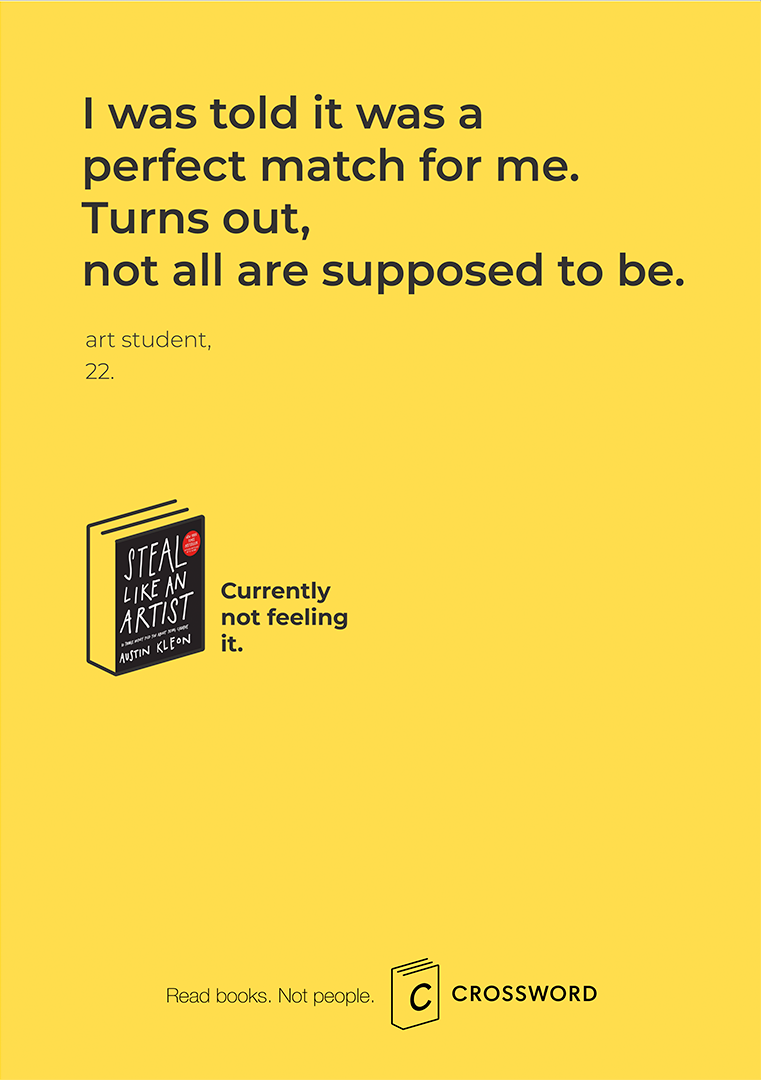
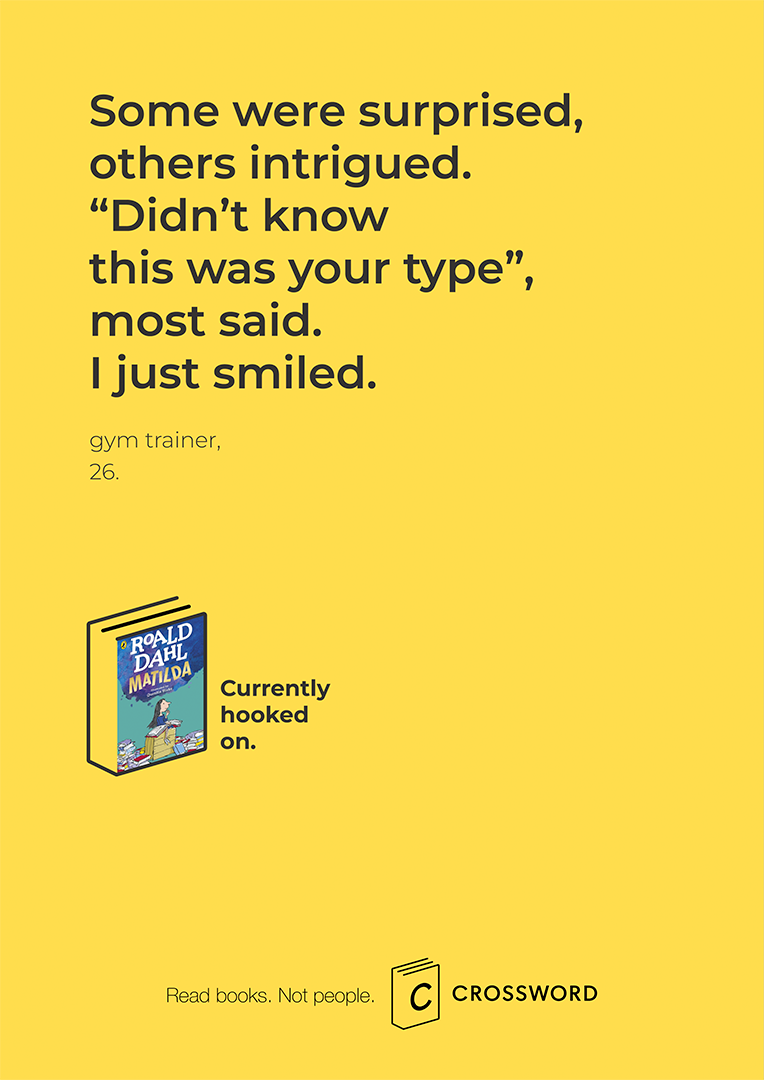
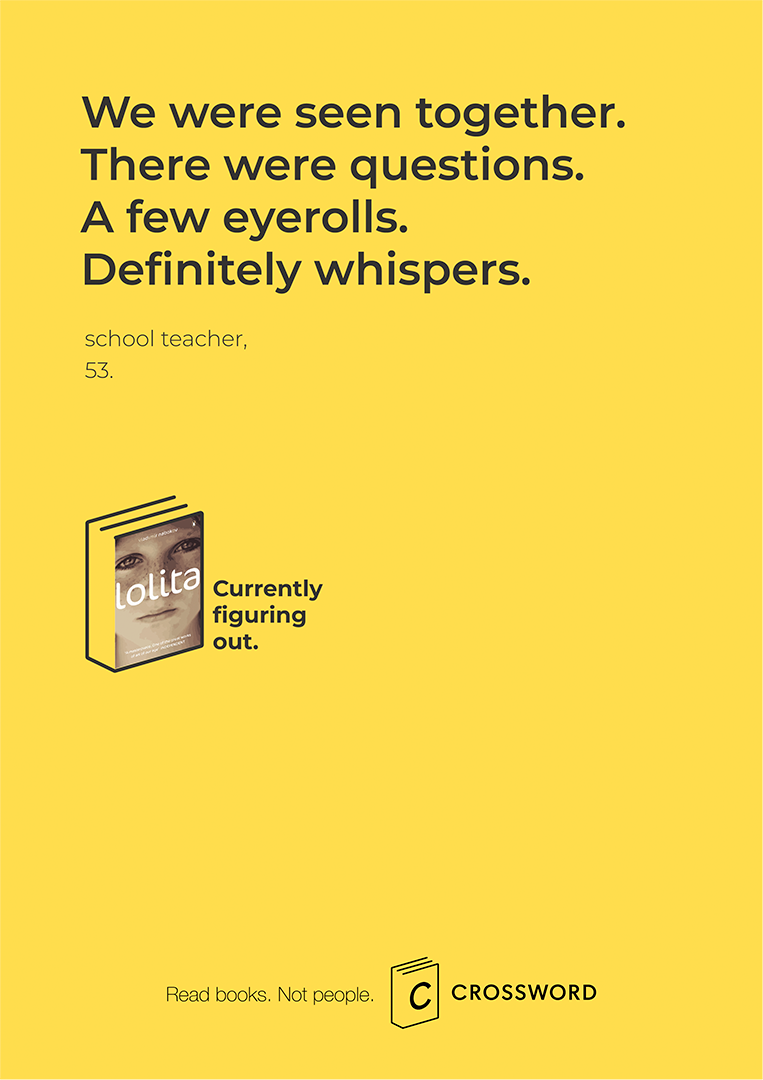
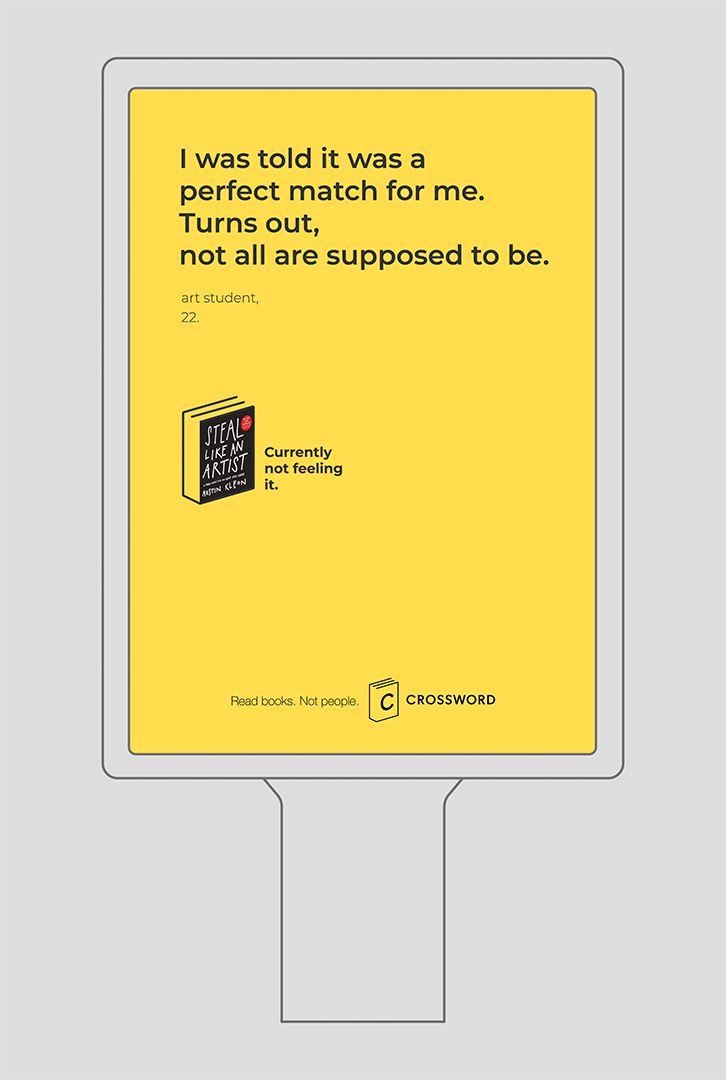
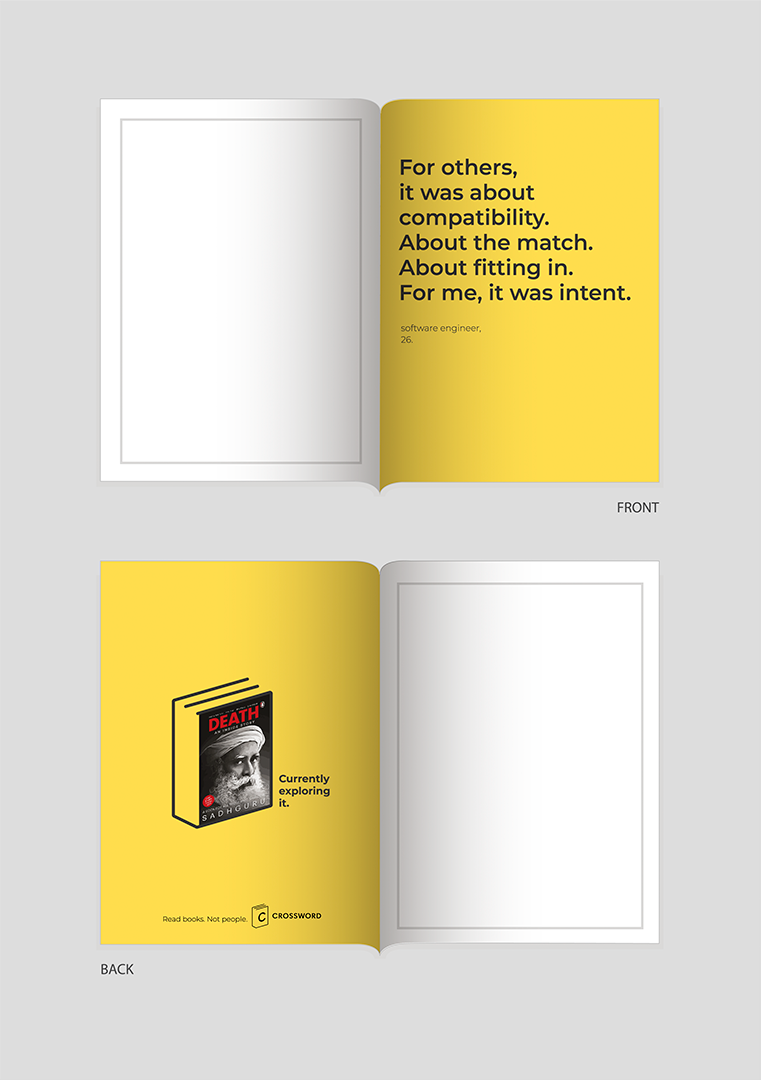
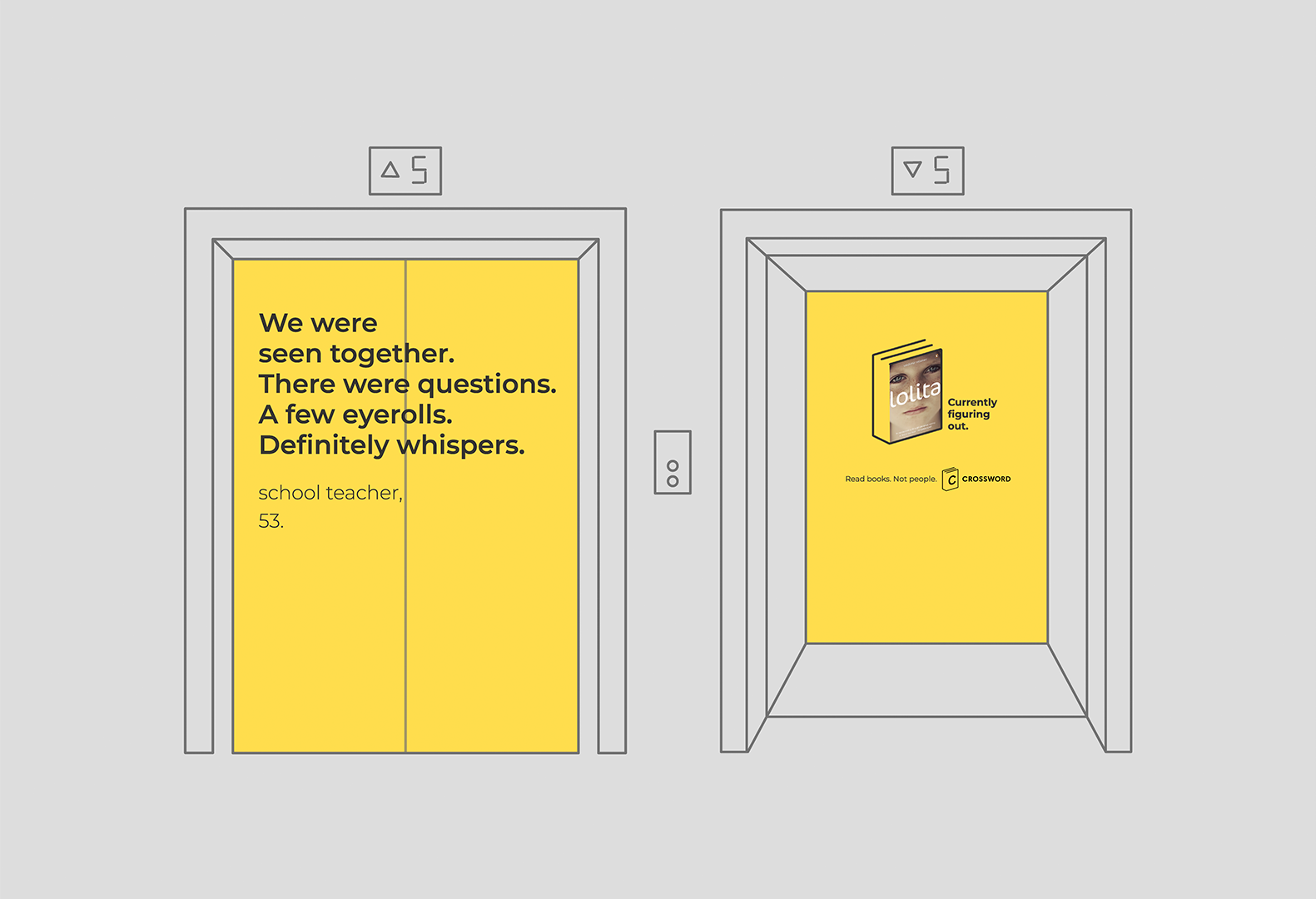
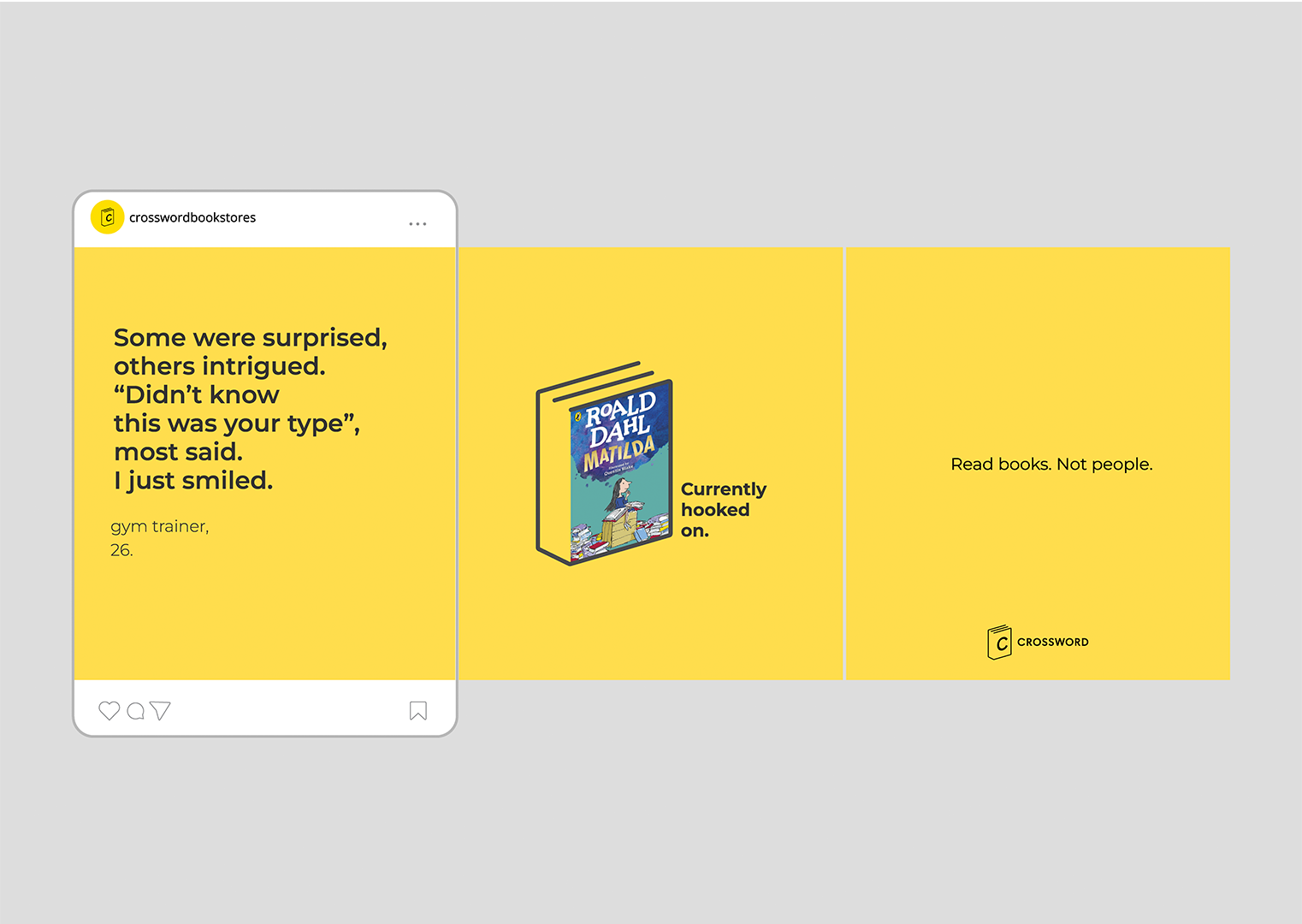
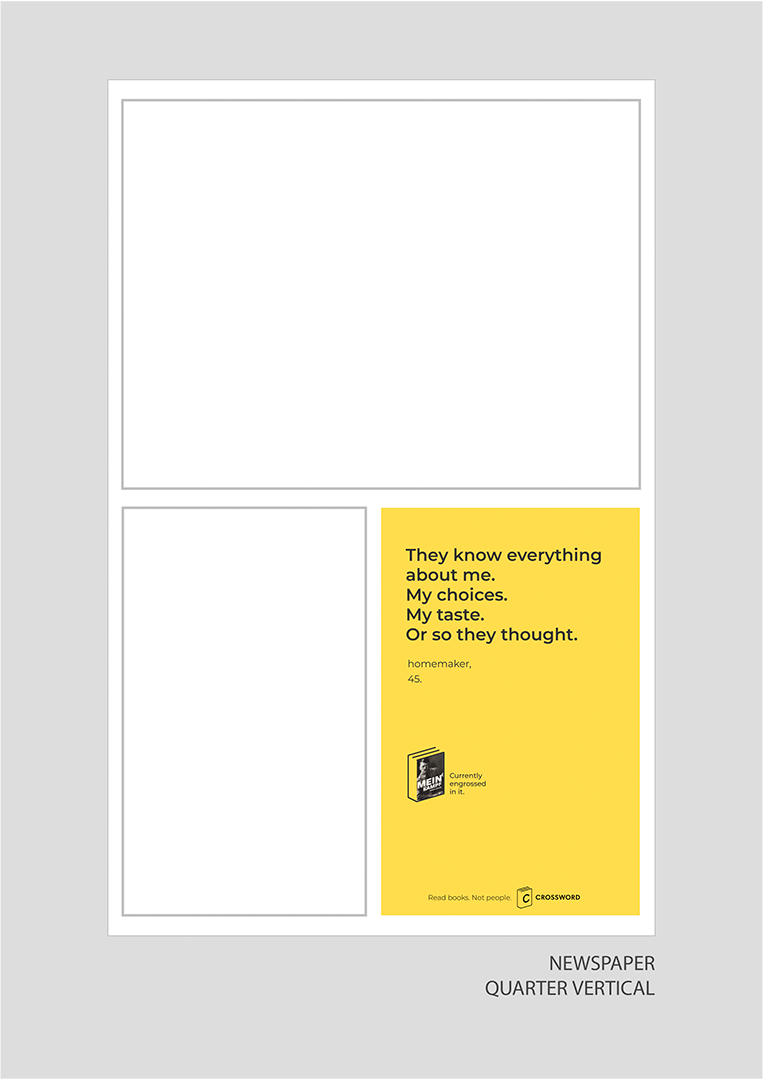
The campaign uses minimal layouts with short, first-person statements from different individuals, along with their age and profession, written to feel like judgments or assumptions. As the viewer continues reading, the book is revealed, shifting the meaning and showing that the reactions were actually about the book. This creates a moment of double judgment—first through the statement, and then through the book based on the perception formed about the person.
The campaign concludes with the line, “Read books. Not people.”, encouraging audiences to read freely instead of forming perceptions and judgments about others.
Idea
The campaign uses misleading statements that feel like assumptions are being made about a person, or that they are being judged, before revealing that the judgments are actually about the book they are reading. This shift makes people realize how easily we judge others.
Insight
Assumptions about people are often connected to their reading choices. There are certain stereotypes that suggest specific individuals read only particular genres or types of books. For example, people who read certain books are automatically considered “smart” because we are conditioned to attach intellectual value to specific genres.
As a result, the qualities associated with a book or genre are often assumed to define the person reading it as well.
Problem
People often judge others—and are judged themselves—based on appearance, profession, age, lifestyle, and more. Assumptions are formed before truly understanding the person or their intentions. These snap judgments are often made without context, reducing individuals to stereotypes and leading us to misunderstand them before we genuinely know who they are and what motivates them.